NOTE: This disposition is nonprecedential. United States Court of Appeals
for the Federal Circuit
IN RE: WINGEN LLC,
Appellant
2021-2322
Appeal from the United States Patent and Trademark Office, Patent Trial and Appeal Board in No. 15/229,819.
Decided: February 2, 2023
SEAN ALLEN PASSINO, Pilloff Passino & Cosenza LLP, Alexandria, VA, argued for appellant. Also represented by MARTIN JAMES COSENZA, II, RACHEL KAREN PILLOFF.
MAUREEN DONOVAN QUELER, Office of the Solicitor, United States Patent and Trademark Office, Alexandria, VA, argued for appellee Katherine K. Vidal. Also represented by SARAH E. CRAVEN, THOMAS W. KRAUSE, AMY J. NELSON, FARHEENA YASMEEN RASHEED.
Before LOURIE, TARANTO, and STOLL, Circuit Judges.
WinGen LLC (“WinGen”) appeals from a final written decision of the U.S. Patent and Trademark Office Patent2 Trial and Appeals Board (“the Board”) affirming an examiner’s rejection of claims 1–4, 6, 7, and 9–15 of U.S. Patent Application 15/229,819 (“the ’819 application”), which is an application for reissue of U.S. Patent 9,313,959 (“the ’959 patent”) filed under 35 U.S.C. § 251. See Ex parte Ushio Sakazaki, Appeal No. 2021-002993 (P.T.A.B. Jul. 14, 2021) (“Decision”), J.A. 1–38. For the reasons provided below, we affirm.
BACKGROUND
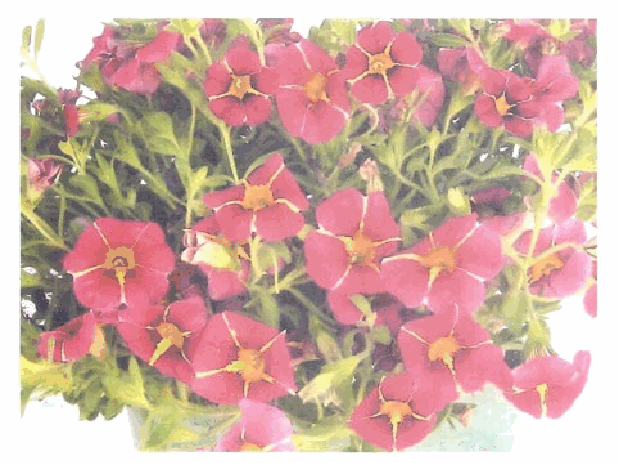
The ’819 application is a reissue application of a utility patent directed to an ornamental Calibrachoa plant, similar to a petunia, known as ‘Cherry Star.’ J.A. 88 at col. 1 ll. 27–29. The claimed plant variety comprises a “single half-dominant gene” that results in a center-star pattern on the petals. Id. at col. 9 ll. 13–21. That petal phenotype had not previously been observed in any wild species of Calibrachoa, but rather was created through the inventor’s breeding process. Id. at col. 1 ll. 20–23. Figure 1, showing ‘Cherry Star,’ is reproduced below.
J.A. 140.
3Claim 1 is representative:
1. A Calibrachoa plant comprising at least one inflorescence with a radially symmetric pattern along the center of the fused petal margins, wherein said pattern extends from the center of the inflorescence and does not fade during the life of the inflorescence,
and wherein the Calibrachoa plant comprises a single half-dominant gene, as found in Calibrachoa variety ‘Cherry Star,’ representative seed having been deposited under ATCC Accession No. PTA-13363.
J.A. 92 at col. 9 ll. 13–21. During the prosecution of the ’959 patent, the limitation “a single half-dominant gene” was added to claim 1 overcome a rejection. Decision, J.A. 8; J.A. 307. The other claims relate to more specific properties of the plant or methods of producing the plant. J.A. 92 at col. 9 ll. 22–col. 10 ll. 51.
The examiner issued a final office action that included rejections for lack of written description, nonstatutory double patenting, lack of enablement, and prior public use. J.A. 1605–30. Of relevance, the examiner rejected claims 1–4, 6, 7, and 11 under pre-AIA 35 U.S.C. § 102(b) based upon an alleged prior public use of the invention at an event hosted by Proven Winners North America LLC (“Proven Winners”). J.A. 1611–15. Other claims were rejected as obvious based on the aforementioned alleged public use of ‘Cherry Star’ in combination with one of two other4 printed publications: Butler1 (claims 9, 10, 14, 15) and Dole2 (claims 12, 13). J.A. 1615–16.
Proven Winners, which has common shareholders with the original assignee of the ’959 patent, Plant 21 LLC (“Plant 21”), is a brand management and marketing entity responsible for various plant brands. J.A. 29. WinGen is the current assignee of the ’959 patent. Plant 21 entrusted Proven Winners with samples of ‘Cherry Star’ to show at a private event at Home Depot. At that event, a ‘Cherry Star’ plant was on display. J.A. 326. Attendees were not permitted to take cuttings, seeds, or tissue samples of the plant, but were provided a leaflet to bring home that included a photograph and brief description of the plant. Id. Visitors were under no obligations of confidentiality regarding what they had seen or the content of the handout but were not provided any gene or breeding information regarding ‘Cherry Star.’ Id.
Following the examiner’s final rejection of all pending claims, WinGen appealed to the Board. The Board reversed all but the examiner’s prior public use-based rejections. The Board found that ‘Cherry Star’ had been accessible to the public—the attendees, not Proven Winners—at the Home Depot event and upheld the examiner’s rejections under § 102(b). J.A. 28–36. The Board noted that it was undisputed that a complete invention5 comprising all the claimed characteristics was on display at the Home Depot event and found that there were no confidentiality restrictions due to the dissemination of the handout.3 J.A. 33–34.
WinGen appeals the Board’s rejection of claims 1–4, 6, 7, and 9–15 of the ’819 application. We have jurisdiction under 28 U.S.C. § 1295(a)(4)(A).
DISCUSSION
We review the Board’s legal determinations de novo, In re Elsner, 381 F.3d 1125, 1127 (Fed. Cir. 2004), and review the Board’s factual findings underlying those determinations for substantial evidence. In re Gartside, 203 F.3d 1305, 1316 (Fed. Cir. 2000). Public use under pre-AIA 35 U.S.C. § 102(b) is a question of law based on underlying facts. Netscape Commc’ns Corp. v. Konrad, 295 F.3d 1315, 1320 (Fed. Cir. 2002). Obviousness is a legal determination based on underlying factual findings. Intelligent Bio-Sys., Inc. v. Illumina Cambridge Ltd., 821 F.3d 1359, 1366 (Fed. Cir. 2016).
WinGen argues on appeal that the Board erred in finding prior public use when all of the claimed features (e.g., the plant genetics) were not made available to the public. Namely, WinGen asserts that without actual possession of ‘Cherry Star’ from which it may be bred, it could not fairly be said that anyone was in possession of all the claimed6 features. In particular, WinGen argues that attendees would not have been aware of or able to readily ascertain that ‘Cherry Star’ resulted from a “single half-dominant gene,” and therefore the display at the Home Depot event was not an invalidating prior public use.
An applicant may not receive a patent for an invention that was “in public use . . . more than one year prior to the date of the application for patent in the United States.” 35 U.S.C. § 102(b) (2012). To determine whether a prior use constitutes an invalidating “public use,” we consider “whether the purported use: (1) was accessible to the public; or (2) was commercially exploited.” Invitrogen Corp. v. Biocrest Mfg., L.P., 424 F.3d 1374, 1380 (Fed. Cir. 2005). Although our precedent includes a plethora of cases analyzing what constitutes a use “accessible to the public,” what is necessary for an invalidating prior public use of a plant has not been considered at length by this court. Our only case involving prior public use of a plant, Delano Farms Co. v. Cal. Table Grape Comm’n, 778 F.3d 1243 (Fed. Cir. 2015), hinged on facts much different from those before us. Delano Farms involved the unauthorized use of a patented grape varietal. Several alleged public uses were considered, but of relevance here was the unauthorized growing of the claimed grapes in locations visible from public roads. Id. at 1249. Although viewable by the public, these grapes were “not labeled in any way” and there was no evidence that anyone recognized the grapes as the claimed varietal. Id. We therefore concluded that there was no prior public use.
Here, the same cannot be said. The ‘Cherry Star’ plant on display at the Home Depot event was indisputably identifiable as such. See J.A. 1473 (Examiner concluding that “‘Cherry Star’ . . . was specifically identified at the Home Depot event”). Indeed, Kerry Meyer, the Program Director at Proven Winners, testified that, “[a]n advertisement containing a picture and description of ‘Cherry Star’ was given7 to attendees of the HOME DEPOT® event.” J.A. 326. The relevant portion of the handout is reproduced below.
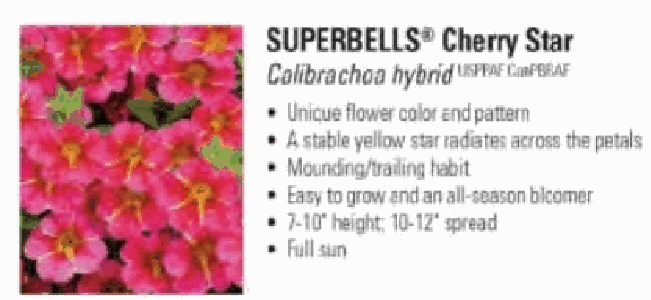
J.A. 3945. Although the handout itself cannot constitute a public use, the leaflet confirms that attendees were informed that the physical plant on display was, in fact, ‘Cherry Star.’
Further, and more importantly, unlike the grapes at issue in Delano Farms, the purpose, or use, of ‘Cherry Star’ is purely ornamental. Appellant Br. at 27 (“To be clear, ‘Cherry Star’ is an ornamental plant.”); J.A. 88 at col. 1 ll. 27–28 (“The present disclosure relates generally to the field of ornamental Calibrachoa plants.”). None of the significant public use cases, including those cited by the parties, involved an invention whose intended purpose was ornament.4 See, e.g., Egbert v. Lippmann, 104 U.S. 333 (1881) (corset); Dey, L.P. v. Sunovion Pharms., Inc., 715 F.3d 1351 (Fed. Cir. 2013) (pharmaceutical drug);8 Motionless Keyboard Co. v. Microsoft Corp., 486 F.3d 1376, 1379 (Fed. Cir. 2007) (keyboard); In re Epstein, 32 F.3d 1559 (Fed. Cir. 1994) (software). This case therefore presents a unique question.
In Motionless Keyboard, 486 F.3d at 1385, we found that there was no evidence showing that “the inventions were used for their intended purpose” because the only alleged prior public uses involved the mere visual display of the claimed keyboard “without putting it into use.” We found that, because the keyboard “was not connected to a computer or any other device” and was not ever used “to transmit data,” the disclosures did not rise to the level of public use. Id. This case is different. The only stated use for ‘Cherry Star’ is to be ornamental. Appellant Br. at 27; J.A. 88 at col. 1 ll. 27–28. The displaying of ‘Cherry Star’ at the Home Depot event was therefore undoubtedly a use for its intended purpose: ornament.
The Board concluded that because the ‘Cherry Star’ plant on display at the Home Depot event embodied the claimed invention and such use was publicly accessible, the display of the plant at the event constituted prior public use under pre-AIA 35 U.S.C. § 102. WinGen argues that the claimed genetics of ‘Cherry Star’ needed to have been publicly disclosed for there to have been an invalidating public use. But WinGen did not meaningfully present such an argument to the Board. We agree with the Director that such an argument was forfeited. The Board did not decide, and the Director does not contend, that it was legally irrelevant whether attendees at the plant display, lacking physical possession of the plant, could discern that it had the claimed genetic character. We do not decide the issue either.
We therefore affirm the Board’s affirmance of the examiner’s rejection of claims 1–4, 6, 7, and 11 as anticipated. Because WinGen makes no separate arguments with regard to the Board’s affirmance of the examiner’s rejection9 of claims 9, 10, and 12–15 as obvious, we likewise affirm the rejection of those claims.
CONCLUSION
We have considered WinGen’s remaining arguments but find them unpersuasive. For the foregoing reasons, the decision of the Board is affirmed.
AFFIRMED
Footnotes
- ↩ 1 J.D. Butler et al., Plant Breeding as a Hobby, UNIV. OF ILL., COLL. OF AGRIC., EXTENSION SERV. IN AGRIC. AND HOME ECON. CIRCULAR 817 (1960), http://hdl.handle.net/2142/33706. See Ex parte Ushio Sakazaki, Appeal No. 2021-002993, Appeal Br. Ex. 21-1.
- ↩ 2 John M. Dole et al., Producing Vegetative Petunias and Calibrachoa, GREENHOUSE PROD. NEWS (Mar. 2002), http://www.gpnmag.com/article/producing-vegetative-petunias-and-calibrachoa/. See Ex parte Ushio Sakazaki, Appeal No. 2021-002993, Appeal Br. Ex. 22-1.
- ↩ 3 It is undisputed that ‘Cherry Star’ was not on sale or offered for sale at the Home Depot event. Because the Board found that ‘Cherry Star’ had been accessible to the public at the Home Depot event, the Board found that it did not need to address whether it had been commercially exploited or not. J.A. 30. We, like the Board, do not find it necessary to address that issue.
- ↩ 4 Notably, plant inventors have the option of seeking either a plant patent under 35 U.S.C. § 161 or a utility patent directed to a plant under 35 U.S.C. § 101. Each has certain drawbacks and benefits, but only § 101 requires the invention to be “useful.” Here, the applicant chose to seek a utility patent. Usefulness has not been raised in this case and we do not address it here.