IN THE UNITED STATES DISTRICT COURT
FOR THE EASTERN DISTRICT OF TEXAS
MARSHALL DIVISION
FLASHMARK TECHNOLOGIES LLC, et. §
al., § §
Plaintiffs, § Civil Action No. 2:06CV205 §
v. §
§ JUDGE RON CLARK
GTECH CORPORATION and GTECH §
HOLDINGS CORPORATION § §
Defendants.
MEMORANDUM OPINION AND ORDER CONSTRUING CLAIM TERMS OF
UNITED STATES PATENT NO. 5,109,153
Plaintiffs Flashmark Technologies, et. al. (“Flashmark”) allege that Defendants GTECH Corporation and GTECH Holdings Corporation (collectively “GTECH”) infringe United States Patent No. 5,109,153 (“the ` 153 patent”). The court conducted a Markman hearing to assist the court in interpreting the meaning of the claim terms in dispute. Having carefully considered the patent, the prosecution history, the parties’ briefs, and the arguments of counsel, the court now makes the following findings and construes the disputed claim terms.1
I. Claim Construction Standard of Review
Claim construction is a matter of law. Markman v. Westview Instruments, Inc., 517 U.S. 370, 116 S. Ct. 1384 (1996) (“Markman II”). “The duty of the trial judge is to determine the meaning of2 the claims at issue, and to instruct the jury accordingly.” Exxon Chem. Patents, Inc. v. Lubrizoil Corp., 64 F.3d 1553, 1555 (Fed. Cir. 1995) (citations omitted).
“‘[T]he claims of the patent define the invention to which the patentee is entitled the right to exclude.’” Phillips v. AWH Corp., 415 F.3d 1303, 1312 (Fed. Cir. 2005) (en banc) (citation omitted). “Because the patentee is required to ‘define precisely what his invention is,’ . . . it is ‘unjust to the public, as well as an evasion of the law, to construe it in a manner different from the plain import of its terms.’” Phillips, 415 F.3d at 1312 (quoting White v. Dunbar, 119 U.S. 47, 52 (1886)).
The words of a claim are generally given their ordinary and customary meaning. Phillips 415 F.3d at 1312. The “ordinary and customary meaning of a claim term is the meaning that the term would have to a person of ordinary skill in the art in question at the time of the invention.”2 Id. at 1313. Analyzing “how a person of ordinary skill in the art understands a claim term” is the starting point of a proper claim construction. Id.
A “person of ordinary skill in the art is deemed to read the claim term not only in context of the particular claim in which the disputed term appears, but in the context of the entire patent, including the specification.” Phillips, 415 F.3d at 1313. Where a claim term has a particular meaning in the field of art, the court must examine those sources available to the public to show3 what a person skilled in the art would have understood disputed claim language to mean. Id. at 1314. Those sources “include ‘the words of the claims themselves, the remainder of the specification, the prosecution history, and extrinsic evidence concerning relevant scientific principles, the meaning of technical terms, and the state of the art.’” Id. (citation omitted).
“[T]he ordinary meaning of claim language as understood by a person of skill in the art may be readily apparent even to lay judges, and claim construction in such cases involves little more than the application of the widely accepted meaning of commonly understood words.” Phillips, 415 F.3d at 1314. In these instances, a general purpose dictionary may be helpful. Id.
However, the Court emphasized the importance of the specification. “[T]he specification ‘is always highly relevant to the claim construction analysis. Usually it is dispositive; it is the single best guide to the meaning of a disputed term.’” Phillips, 415 F.3d at 1315 (quoting Vitronics Corp. v. Conceptronic, Inc., 90 F.3d 1576, 1582 (Fed. Cir. 1996)). A court is authorized to review extrinsic evidence, such as dictionaries, inventor testimony, and learned treaties. Phillips, 415 F.3d at 1317. But their use should be limited to edification purposes. Id. at 1319.
The intrinsic evidence, that is, the patent specification, and, if in evidence, the prosecution history, may clarify whether the patentee clearly intended a meaning different from the ordinary meaning, or clearly disavowed the ordinary meaning in favor of some special meaning. See Markman v. Westview Instruments, Inc., 52 F.3d 967, 979-80 (Fed. Cir. 1995). Claim terms take on their ordinary and accustomed meanings unless the patentee demonstrated “clear intent” to deviate from the ordinary and accustomed meaning of a claim term by redefining the term in the patent specification. Johnson Worldwide Assoc., Inc. v. Zebco Corp., 175 F.3d 985, 990 (Fed. Cir. 1999).
4The “‘ordinary meaning’ of a claim term is its meaning to the ordinary artisan after reading the entire patent.” Phillips, 415 F.3d at 1321. However, the patentee may deviate from the plain and ordinary meaning by characterizing the invention in the prosecution history using words or expressions of manifest exclusion or restriction, representing a “clear disavowal” of claim scope. Teleflex, Inc. v. Ficosa N. Am. Corp., 299 F.3d 1313, 1327 (Fed. Cir. 2002). It is clear that if the patentee clearly intended to be its own lexicographer, the “inventor’s lexicography governs.” Phillips, 415 F.3d at 1316.
II. Claim Construction
The `153 patent discloses three inventions or groups of inventions. The first relates to articles, such as lottery tickets or coupons, which are voidable through the application of radiant energy. The voidable articles are discussed as being made with a radiant energy responsive material positioned on an identification code. The material is invisible or essentially so. It is not activated by ambient light, but obscures the identification code upon being exposed to a particular spectrum or level of radiant energy.
The second invention describes using a controlled flash of radiant energy to cancel articles or to create an image. The cancellation device for voiding documents is described as being made with a scanner, a comparator and a radiant energy source for exposing the document to activate the energy responsive material on the document.
The third invention, which is not at issue in this case, involves printing by imaging light onto a substrate coated with photosensitive material including an infrared absorbing dye. While the patent discloses that the voidable articles mentioned above can be printed this way, the claims are independent of each other.
5All of the disputed terms are contained in Claims 1 and 24. Claim 1 with the disputed terms in bold and agreed terms in italics, states:
A voidable article comprising: a printed surface; a machine readable identification code on an area of said printed surface; a material, peculiarly responsive to a particular form of radiant energy not normally present in ambient light in amounts sufficient to cause said material to discolor, positioned on said printed surface in the area of said machine readable code, said material making said code unreadable after being exposed to said particular form of radiant energy Claim 24 with the disputed terms in bold and agreed terms in italics, states:
A device for invalidating articles comprising: a scanner capable of reading a machine readable code on an article; comparator means for receiving a signal from said scanner representative of said machine readable code and for generating a validity signal indicating whether said article has met a validity criteria; and a radiant energy source which exposes at least a portion of said article to a dose of radiant energy in response to a validity signal from said comparator means, said radiant energy causing a marking to appear on said article thereby invalidating said article.
1. “Radiant Energy.” Used in Claims 1, 3, 4, 12, and 24-30.
Flashmark suggests “the forms of energy described in [dependent] Claims 3 and 4, or any form of heat or range of light wavelengths.” GTECH proposes “energy transferred by electromagnetic waves, rather than by conduction or convection.” The main dispute here is whether “radiant energy” is limited to electromagnetic energy, or can include heat transferred by contact with a hot object (conduction) and heat transferred by hot liquid or gas moving past an object (convection).
6A common example may help illustrate the difference. A microwave oven uses the part of the electromagnetic spectrum known as microwaves to heat food. A microwave safe plate will not feel hot after being placed in an operating microwave oven. However, the microwave will heat food on that plate. When the food heats, the plate can become hot from the transfer of heat from the food through conduction.
Flashmark maintains that the patentee acted as his own lexicographer in defining “radiant energy” as both electromagnetic energy, such as visible light and infrared light, and as “heat,” of a type which is not electromagnetic energy. Flashmark points to language in the specification such as “a particular form of radiant energy, whether it be heat or light . . . .” ‘153 Patent Col. 1, ll. 65-66. Several other similar references are made in the specification, and the claims themselves use phrases such as :
“3 . The article of claim 1 wherein said particular form of radiant energy comprises heat.”
Col. 7, ll. 30-31;
“4. The article of claim 1 wherein said particular form of radiant energy comprises a range
of light wavelengths.” Col. 7, ll. 32-34; and
“5. The article of claim 4 wherein said range of light wavelengths covers from about 750
nanometers to about 950 nanometers." Col. 7, ll. 35-37.
Flashmark invokes the doctrine of claim differentiation to assert that “heat” must therefore surely be different than “light.” They are different, but that does not answer the question of whether one of ordinary skill would understand “radiant energy comprises heat” to refer to some form of energy outside of the electromagnetic spectrum. As discussed below, “light” and “heat” are commonly used to describe different bands of wavelengths in that spectrum.
7In spite of Flashmark’s impassioned arguments, the patentee provided no special definition of “radiant energy.” On the other hand, the task is not made easy by a clear intentional disclaimer. The court is faced with the familiar problem of the “twin axioms,” which require reading claims in view of the specification but forbid importing limitations from the specification into the claims Liebel-Flarsheim Co. v. Medrad, 358 F.3d 898, 904 (Fed. Cir. 2004). Resort to dueling canons of construction is not going to resolve this dilemma
No single statement in the patent nor in the prosecution history is sufficient by itself to determine the meaning of “radiant energy.” Rather the court must examine the claim, the specification, the prosecution history, and relevant scientific principles to determine how one of ordinary skill trying to use, or design around, the invention would have understood the term.
Scientific Principles Relevant to the Art
A court may not attempt to define claim terms from extrinsic evidence. However, the “customary meaning” of a term “refers to the ‘customary meaning in [the] art field.’” Phillips, 415 F.3d at 1313 (citation omitted). A review of basic, uncontroverted scientific principles provides “an objective baseline from which to begin claim interpretation.” Id. The words of the claims are viewed from the point of view of one of ordinary skill in the art - in this case, someone with a knowledge of science, including the properties of energy.
The parties agreed that “light,” in its everyday meaning, and as used in this patent, is a form of electromagnetic energy that travels at specified wavelengths. The parties also agreed that the electromagnetic spectrum can be divided into ranges, shown generally on the chart, attached as Appendix A, and discussed at the hearing as Court Exhibit 1.
8The ranges are marked on the chart in micrometers or one thousandth of a millimeter, denoted by the symbol “µm.” The patent uses the unit of measurement known as the “nanometer,” which is one thousandth of a micrometer. So Claim 5's description of light wavelengths “from about 750 nanometers to about 950 nanometers” would be shown on the chart from about .750 µm to about .950 µm. As shown on the chart, this would range from about the bottom end of the visible red light spectrum into what is called the “near infrared” area on the chart. Longer wavelengths, from about 5.5 µm to about 1000 µm fall into what is sometimes denoted as “thermal infrared.” This is generally the range of electromagnetic radiation felt as heat and used in cooking.
Language in the Claim and Specification
Given a basic understanding of the electromagnetic spectrum, it would not be unusual for one skilled in the art to understand “heat” as referring to energy at a particular wavelength. With this interpretation, Claims 3, 4, and 5 are simply dependent claims, each of which limits the broad scope of “radiant energy” of Claim 1 to a smaller portion of the electromagnetic spectrum. This does no violence to the presumption that flows from claim differentiation. See Curtiss-Wright Flow Control Corp. v. Velan, Inc., 438 F.3d 1374,1380 (Fed. Cir. 2006). Of course, this does not by itself dispose of Flashmark’s claim that “heat” may be something other than radiant energy.
Claim 1, upon which each of these claims is dependent, limits “radiant energy” to “a particular form . . . not normally present in ambient light . . . .” Col. 7, ll. 21-23. This phrase is important, because, as discussed in more detail below, it was added by the patentee to overcome a rejection by the PTO. Flashmark admits that “light” refers to a portion of the electromagnetic spectrum, but insists that “heat” does not. If “heat” as used in this patent is not in the form of9 electromagnetic waves, it is not going to be “in,” i.e., a component of, ambient light.3 Flashmark has shown no basis to ignore this limitation of the independent claim.
Independent Claim 24 teaches a device that invalidates the voidable articles and documents of Claims 1 - 23. It describes “a radiant energy source which exposes at least a portion of said article to a dose of radiant energy . . . .” Col. 8, ll. 34-35. Again, the dependent claims describe a variety of forms of “radiant energy” including “heat.” But all are dependent upon Claim 24, in which the patentee carefully chose “dose” to describe the application of radiant energy. It would be unusual to describe the application of a heated scanner head to an article as a “dose.” However the use of “dose” is consistent with radiation in the form of wavelengths of the electromagnetic spectrum. The dependent claims 25, 26, 27, 28, 29, and 30 would then each describe the “dose of radiant energy” of Claim 24 as occurring in different bands of the spectrum.
The use of “dose,” by itself, is not enough for the court to construe the term in dispute. It must be taken in conjunction with the other references discussed. However, it is illuminating that in describing the device that voided his voidable articles, the patentee made no attempt to formulate a claim, nor to describe in the specification, any application of “heat” by contact with heated metal, ceramic, or other material (conduction), nor through exposure to moving heated gas or liquid (convection) .
One of ordinary skill in the art would know of the different types of energy transfer. A voidable article could be touched with a hot material (conduction) or placed in a blast of hot air (convection). But nearly every use of the word “energy” in this patent is preceded by the word10 “radiant.” Except in the discussion of prior art, there is no hint in the specification, nor in the prosecution history, of an article or document placed in direct contact with a hot surface or exposed to heated air or other gas. Accordingly, the claims and specification support a construction of “radiant energy” as part of the electromagnetic spectrum.
Prosecution History
Another indication of the way in which claim language was interpreted at the time of the application is seen in the “Supplemental Information Disclosure Statement.” See Supplemental Information Disclosure Statement, 1.28/1991, FLASH 0000061-63 in GTECH’s Ex. E [Doc. #107, Attach. #11, p. 1-3 of 76].4 As required by law, the patentee was disclosing relevant prior art. Obviously an applicant does not submit a disclosure with the statement “this prior art invalidates our requested patent.” Instead the applicant points out that while the disclosed art may be relevant, it is distinguishable. Distinctions drawn between the patented invention and prior art may be useful “since they indicate in the inventor’s own words what the invention is not.” MBO Labs., Inc. v. Becton, Dickinson, & Co., 474 F.3d 1323, 1330 (Fed. Cir. 2007).
In this case the patentee disclosed European Patent Application No: 0 305 211 (“Herbert”), with the explanation: “Herbert discloses a mail item treated with heat sensitive material. Heating causes the material to turn color.” Supplemental Information Disclosure Statement, 1/28/1991, FLASH 0000063 in GTECH’s Ex. E [Doc. # 107, attachment #11, p. 3 of 76]. The Herbert
Application describes applying a thermal print head to items treated with a heat sensitive material11 that changes color when heat is applied. See European Patent Application No: 0 305 211, pp. 2-3 in GTECH’s Ex. J [Doc. # 107, Attach. #16, pp.3-4 of 8].
In other words, Herbert discloses a heated surface (the thermal print head), applied to “a material peculiarly responsive to” the heat from that heated surface, causing the item to change color. Unless one is to assume that the patentee in the present case intended to inform the PTO of invalidating prior art, the “heat” and “heat sensitive materials” of Herbert are not what was claimed in the ‘153 patent by “radiant energy” and “material peculiarly responsive to a particular form of radiant energy.”
Finally, the correspondence between the patentee and the Examiner indicate that both understood “radiant energy” to refer to energy of particular wavelengths. The Examiner initially rejected claims 1-23 as unpatentable over earlier patents that had disclosed materials that changed colors upon exposure to light. “It would have been obvious to have made the Jenkins tickets respond to non-visible wavelengths of energy as taught by Parrotta in order to obtain energy levels . . . .” Office Action, 3/26/1991, FLASH 0000065 in GTECH’s Ex. E [Doc. #107, attachment #11, p. 5 or 76](emphasis added).
The patentee did not respond that his invention claimed a form of “heat” that was not part of the electromagnetic spectrum at all, and thus was not affected by these prior references. That would have run afoul of the Herbert patent. Rather, the patentee amended Claim 1 by adding “not normally present in ambient light in amounts sufficient to cause said material to discolor.” Response to Office Action, 6/28/1991, FLASH 0000078 in GTECH’s Ex. E [Doc. #107, Attachment #11, p. 18 of 76]. As discussed above, the added language indicates that the “radiant energy” of Claim 1 can be defined by wavelengths, as can “ambient light.” Otherwise, the amendment means nothing, and was used only as a subterfuge to confuse the Examiner.
12This understanding is confirmed by the Examiner’s Reasons For Allowance, which substitutes “radiation” for “radiant energy.”
Claims 1-23 and 36 are considered allowable over the prior art because the art of record does not disclose or teach voidable machine-readable articles or documents utilizing a material responsive to radiation which is not normally present in sufficient amounts in ambient light.
Notice of Allowability, p. 2, 9/10/1991, FLASH 0000085 in GTECH’s Exhibit E [Doc. # 107, Attach. #11, p. 25 of 76](emphasis added). It strains credulity to argue that either the patentee or the Examiner even imagined that the language of the claims referred to energy that was not part of the electromagnetic spectrum and thus would not be part of the waves that make up ambient light.
Flashmark argues that the Examiner could have been referring only to Claim 14, which describes documents (not articles) exposed not to “radiant energy,” but to “a sufficient intensity of non-visible wavelength light . . .” Col. 7, ll. 62-63. But Claim 14 simply limits the kinds of articles to documents, and the range of wavelengths to those in the non-visible range. Only a very strained interpretation of the referenced dialogue in the prosecution history would support a conclusion by one skilled in the art that “radiant energy” refers to anything other than energy in the form of specified wavelengths of the electromagnetic spectrum.
In the end, the court must determine what the patentee invented and, more importantly, described. This description can not be read from the point of view of the present patent holder years after the patent was issued, nor of a lawyer, nor even from that of the uneducated inventor operating in a field of art strange to him. The description in the patent is addressed, “as section 112 says, to those skilled in the art to which the invention pertains or with which it is most connected.” Phillips, 415 F.3d at 1313 (citation omitted). Accordingly, the court must reject Flashmark’s argument that Mr. Johnson had only a high school education and, lacking a sophisticated scientific background,13 might have created his own definition that “radiant energy not normally present in ambient light” includes heat other than that present in the electromagnetic spectrum. The court construes this term as follows:
“Radiant Energy” means “energy transferred at certain wavelengths and frequencies of the
electromagnetic spectrum.”
2. “Material, peculiarly responsive to a particular form of radiant energy not normally present in ambient light in amounts sufficient to cause said material to discolor.” Used in Claim 1.
Flashmark suggests that no construction is necessary. In the alternative, Flashmark proposes “a material that responds distinctively to an intensity of light in a range of wavelengths, or of heat, which is not normally encountered in ordinary use in amounts sufficient to cause said material to discolor.” GTECH has suggested:
a material, including an infra-red absorbing dye, formulated to dramatically enhance sensitivity to radiant energy and to reduce the amount of time and energy required to cause the material to become visible in response to radiant energy in infrared wavelengths, in comparison to dry silver materials.5
A construction of this term requires a definition of “radiant energy,” which is addressed above. The court must also construe the “ambient light” in which the “radiant energy” is not normally present. a. Use of Term in Claims and Specification
Claim 1 describes the material as being responsive to radiant energy that is “not normally present in ambient light in amounts sufficient to cause said material to discolor.” ` 153 patent, col.14 7, ll. 22-23. It does not place any further restrictions on the type of material that can make up the article.
The specification states that the “material” is normally invisible, which means that the “material is only slightly visible or visible as background, and does not interfere with the genuinely visible markings on the coupon.” ` 153 patent, col. 3, ll. 25-30. “The material 13 may be responsive to radiant energy such as heat or light. Upon being exposed to heat or light energy not normally encountered in ordinary use, the material 13 will become visible.” ` 153 patent, col. 3, ll. 33-37.
In a preferred embodiment, the specification states that the “presently preferred material 13 is a photosensitive material formed by a mixture of a dry silver material and an infrared absorbing dye.” `153 patent, col. 3, ll. 42-44. “The preferred materials exhibit high absorption of light wavelengths in the approximate range of about 750 nanometers to 950 nanometers.” `153 patent, col. 3, ll. 61-63.
This preferred embodiment is seen in Claims 5 and 6, which are dependent on Claim 1. Claim 5 states: “The article of claim 4 wherein said range of light wavelengths covers about 750 nanometers to about 950 nanometers.” Claim 6 states: “The article of claim 5 wherein said material comprises a mixture of dry silver and infra-red absorbing dye.”
GTECH’s proposal, therefore, is based upon limitations in a preferred embodiment and the dependent claims. In general, an independent claim is presumed to be broader in scope and to encompass the dependent claim. See Phillips, 415 F.3d at 1315 (“[T]he presence of a dependent claim that adds a particular limitation gives rise to a presumption that the limitation in question is not present in the independent claim.”)
Flashmark argues that in defining this term, the words “ambient light” be changed to “ordinary use,” relying upon a single appearance of that phrase in the specification at Col. 3, l. 36.15 If “ambient light” could just be changed to “ordinary use” then “radiant energy” would be more likely to refer to “heat” in forms other than electromagnetic wavelengths. The patentee could
have picked any words he wanted for the claims, but he chose to add “ambient light,” not “ordinary use,” to Claim 1 to overcome the Examiner’s initial rejection. Amendment, 6/ 25/1991 p. 2, FLASH 0000078 in GTECH’s Ex. E [Doc. # 107, Attach. #11, p. 18 of 76]. And, in distinguishing prior art while trying to overcome that rejection, the patentee stressed that prior inventions discolored in ambient light. Amendment, 6/25/1991, pp. 4-5, FLASH 0000080-81 in GTECH’s Ex. E [Doc. # 107, Attach. #11, p. 20-21].
A further indication of what the patentee intended by the use of “ambient light” is found in the same amendment: “As stated in the description, color formation is caused in DYLUX by UV found in daylight or artificial light which contains UV. To prevent discoloration in ambient light the DYLUX paper must be deactivated . . . .” Amendment 6/25/1991, p. 8, FLASH 0000084 in GTECH’s Ex. E [Doc. # 107, Attach. 11, p. 24] (emphasis added). The court need not consider at this point whether the “ordinary use” term is a disclosure of an invention in the specification which was not claimed, and so is donated to the public. Johnson & Johnston Assoc. V. R.E. Serv. Co., 285 F.3d 1046, 1054 (Fed. Cir. 2002) (“[W]hen a patent drafter discloses but declines to claim subject matter, . . . this action dedicates that unclaimed subject matter to the public.”).
At the hearing the court discussed a proposed definition, together with numerous changes suggested by the parties. In the end, Flashmark would not agree to a construction that defined “ambient light” as anything but “ordinary use.” For the reasons noted above there is no basis to adopt “ordinary use,” especially when the patentee chose not to use the phrase in amending the claim.
Flashmark’s expert stated that while “direct” light would be “focused,” ambient light would include “normal lighting” in a room and direct sunlight outdoors, or “conditions of the environment16 without that presence of the directed light.” This is a more expansive definition of ambient light than that suggested by the court, and agreed to by GTECH. However, it is not outside the ambit of the use of the term in the specification and in the prosecution history references set out above, and it comports with its use in some dictionaries.
The court was concerned about imposing a limitation requiring that the “material” of the invention not discolor even in direct sunlight, as will a newspaper and many other papers. However, Flashmark insisted that “ambient light” included direct sunlight, perhaps because their idea of “ordinary use” includes using the articles in direct sunlight. The court is not adverse to adopting this concept as it is reasonable and narrows, rather than expands, the scope of the claim. This
term will be construed as follows:
Material peculiarly responsive to a particular form of radiant energy not normally present in ambient light in amounts sufficient to cause said material to discolor means “a substance which darkens or changes color when exposed to radiant energy (as previously defined by the court) of a type or intensity (or both) that is not ordinarily present in sunlight or normal indoor lighting.”
III. Conclusion
The jury shall be instructed in accordance with the court’s interpretation of the disputed claim terms in the ` 153 patent.
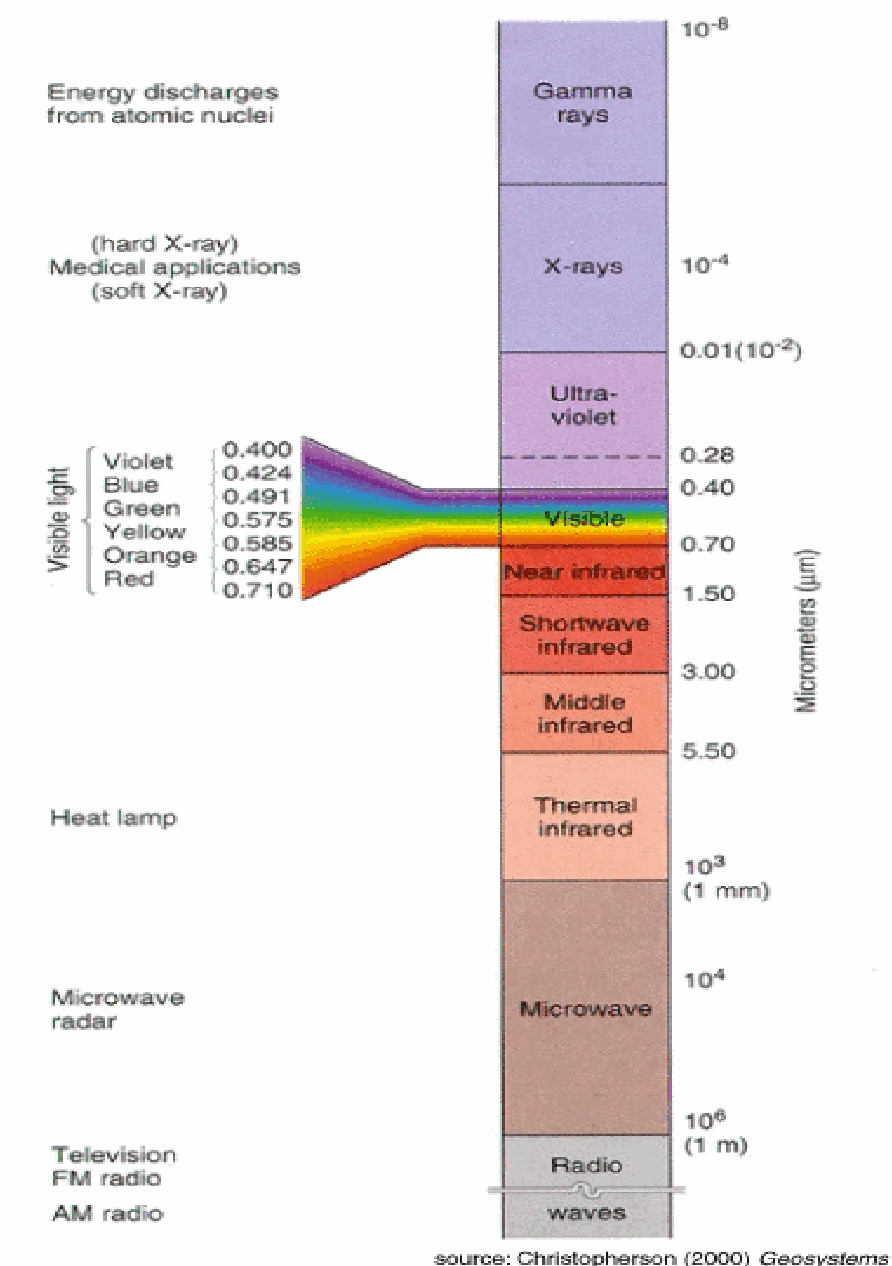
17Appendix A (Court Exhibit 1)
Footnotes
- ↩ 1While this Order governs in the event of any conflict between the Order and the Court’s preliminary analysis at the hearing, representations of the parties in the record may clarify the bases for the conclusions set out herein.
- ↩ 2Based on the patents at issue, the technology involved, and the representations of the parties, the court defines one of ordinary skill in the art to be someone with the equivalent of a four year degree, usually denoted in this country as a B.A. or B.S. degree, in a field of science or engineering with courses covering the properties of various forms of energy, chemistry, computer systems, and computer programming, and some experience in the printing industry. Experience and/or technical training may substitute for college education requirements, while advanced degrees may substitute for some of the experience.
- ↩ 3Claim construction can not rest the sophistical argument that anything placed in a room can be “in” the room’s ambient light, but since the non-electromagnetic heat source is not normally “in” a room it meets the limitation of Claim 1.
- ↩ 4The court is not engaging in prosecution disclaimer analysis, but rather is examining how the term was used in the prosecution history at the time of the invention.
- ↩ 5In the responsive brief, GTECH suggested: “a material including an infra-red absorbing dye, formulated to dramatically enhance sensitivity to radiant energy and to reduce the amount of time and energy required to cause the material to become visible in response to wavelengths of radiant energy outside the visible spectrum in the range of about 750-950 nm, and at intensity levels not normally encountered in ordinary use, namely about 50 ergs per square centimeter.”