NOTE: This disposition is nonprecedential. United States Court of Appeals
for the Federal Circuit
JONATHAN BERALL, M.P.H.,
Plaintiff-Appellant
v.
TELEFLEX MEDICAL INC.,
Defendant-Appellee
2025-1124
Appeal from the United States District Court for the Eastern District of North Carolina in No. 5:22-cv-00331-FL, Judge Louise Wood Flanagan.
Decided: July 2, 2026
MARCUS EDWARD SERNEL, Kirkland & Ellis LLP, Chicago, IL, argued for plaintiff-appellant. Also represented by ERIC DAVID HAYES; PETER JASON EVANGELATOS, New York, NY.
NICHOLAS A. BROWN, Greenberg Traurig LLP, San Francisco, CA, argued for defendant-appellee. Also represented by ELANA ARAJ, SCOTT JOSEPH BORNSTEIN, RICHARD CHARLES PETTUS, New York, NY; JONATHAN WISE, Philadelphia, PA.
2Before DYK, STOLL, and STARK, Circuit Judges.
Dr. Jonathan Berall originally filed a patent infringement suit in the United States District Court for the Southern District of New York against LMA North America, Inc. for infringing claims 1–15 of U.S. Patent No. 5,827,178. The lawsuit was transferred to the United States District Court for the Eastern District of North Carolina after Teleflex Medical Incorporated acquired LMA and Dr. Berall amended his complaint to add Teleflex’s products to his suit. The District Court for the Eastern District of North Carolina construed the claim term “mounted on” and then granted Teleflex’s motion for summary judgment of noninfringement based on its construction. Dr. Berall appeals the district court’s decision to transfer and summary judgment of noninfringement. For the reasons discussed below, we affirm the district court’s decision to transfer the case, adopt its construction of the claim term, and affirm its summary judgment of noninfringement.
BACKGROUND
I
The ’178 patent is titled “Laryngoscope for Use in Trachea Intubation” and is directed to “a modification of current state of the art laryngoscopes such that a scope or camera is mounted on its distal end, preferably at or in the vicinity of the far tip of the laryngoscope blade, . . . [and] [t]he camera is operatively connected to a screen arranged for viewing.” U.S. Patent No. 5,827,178 Title, col. 2 ll. 46– 54. In the patented invention, a “screen can be attached . . . to the handle of the laryngoscope above the blade, so that the Professional Intubator’s direct view into the mouth and simultaneous view of the screen can be3 achieved with no head movement by the Professional Intubator and minimal change in his or her line of vision.” Id. at col. 2 ll. 54–59. As illustrated in Figure 4 below, the laryngoscope in the ’178 patent includes a “camera 26,” which “is mounted on the blade 17” and “is powered by a battery 32 [that is] preferably in the handle 21.” Id. at col. 5 ll. 15–16, ll. 32–33. In addition, a “display means” like “television screen 34 [is] mounted on the handle 21.” Id. at col. 5 ll. 34–35.

Id. Fig. 4. Claims 1 through 5 are illustrative and relevant to the issues on appeal and read:
1. A laryngoscope comprising: a handle and a blade, with the blade having a proximal end connected to the handle and a distal end projecting laterally therefrom; camera means mounted on the blade in the vicinity of the distal end for observing a visual field; and
4display means operatively connected to said camera means for displaying the visual field at a pre-selected location. 2. The laryngoscope as claimed in claim 1, further including lighting means for illuminating the visual field. 3. The laryngoscope as claimed in claim 2, further including power supply means for powering said camera means and said display means. 4. The laryngoscope as claimed in claim 3, wherein said power supply means are mounted in the handle. 5. The laryngoscope as claimed in claim 1, wherein said display means include a screen mounted on the handle and on which is displayed the visual field observed by the camera means.
Id. at col. 6 ll. 6–25 (relevant limitations emphasized).
II
In 2010, Dr. Berall filed suit in the Southern District of New York alleging that LMA infringed claims 1–15 of the ’178 patent by selling the McGrath Series 5 video laryngoscope. In 2011, the district court stayed the proceedings pending reexamination of the ’178 patent. In 2013, while the stay was in place, LMA merged with Teleflex, with Teleflex surviving. The reexaminations of the ’178 patent ended six years later with the U.S. Patent and Trademark Office confirming the patentability of all asserted claims in 2019. LMA filed a statement informing the district court of its acquisition by Teleflex in April 2020. In November 2020, Dr. Berall filed a First Amended Complaint, which did not amend his allegations as to LMA, and LMA filed an answer, which did not contest venue. In December 2020, the district court lifted the stay as to LMA. In January5 2021, the district court granted Dr. Berall’s motion to substitute Teleflex for LMA. One month later, in February 2021, Teleflex, as LMA’s successor-in-interest, filed a motion for summary judgment of no infringement based on patent exhaustion of LMA’s accused products, which the district court denied. In November 2021, Dr. Berall filed a Second Amended Complaint that included allegations against Teleflex as an entity separate from its interest in LMA, including that Teleflex infringed the ’178 patent through its distribution of Airtraq laryngoscopes. Teleflex moved to dismiss, arguing venue was improper against itself in the Southern District of New York. Dr. Berall responded that Teleflex waived its right to contest venue when LMA answered the First Amended Complaint.
The district court first found that Teleflex had not waived its right to contest venue because it was not Teleflex who had answered the First Amended Complaint or sought summary judgment. Rather, it was Teleflex acting on behalf of LMA pursuant to Federal Rule of Civil Procedure 25(c). The district court also found that it was not until Dr. Berall filed his Second Amended Complaint alleging that Teleflex (separate from its role standing in LMA’s shoes) infringed the ’178 patent through Teleflex’s distribution of Airtraq laryngoscopes that Dr. Berall had raised allegations against Teleflex as a defendant separate from LMA. The district court also rejected Dr. Berall’s argument that Teleflex forfeited its venue objection via its litigation conduct, explaining that all the conduct Dr. Berall pointed to was from when Teleflex was acting only as LMA’s successor-in-interest. The district court did not view this type of participation “as a tactical wait-and-see bypassing of [Teleflex’s] opportunity to declare its desire for a different forum.” J.A. 9. The district court thus transferred the case to a district in which venue for Teleflex was proper, which was the Eastern District of North Carolina.
After the case was transferred, the Eastern District of North Carolina held a Markman hearing. Relevant to this6 appeal, the district court construed the claim term “mounted on” as “fastened to the exterior of.” J.A. 29. Based on this construction, Teleflex moved for summary judgment of noninfringement by the McGrath Series 5 accused products—which were the only accused products still in suit at the time of summary judgment.1
The district court granted the motion, determining that there were no genuine issues of material fact and the accused products did not infringe the asserted claims of the ’178 patent either literally or under the doctrine of equivalents. Images of the McGrath Series 5 accused products are reproduced below:
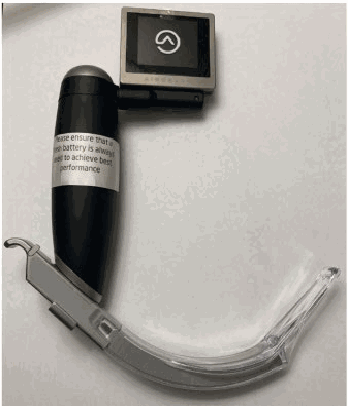
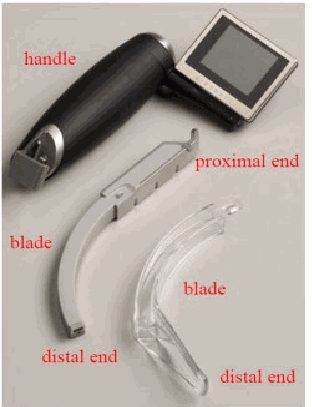

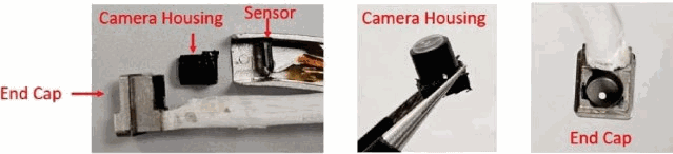
7J.A. 6295 (top left); J.A. 8126 (top right); J.A. 8128 (middle row); J.A. 8130 (bottom row). As to literal infringement, the district court explained that the “undisputed facts show that the camera of the McGrath Series 5 is fastened to the interior of the CameraStick” and “does not include a camera means mounted on the exterior of the blade.” J.A. 49. The district court also explained that Dr. Berall’s arguments to the contrary were all based on the idea that “the camera of the McGrath Series 5 is ‘mounted on’ the blade as long as it ‘has a view to the exterior’ or the ‘lens is exposed to the outside,’” which violated the court’s claim construction. J.A. 50 (citations omitted). The district court also granted summary judgment of no infringement under the doctrine of equivalents. The district court explained that (1) Dr. Berall’s insubstantial differences arguments were legally insufficient because they did not address the claims on a limitation-by-limitation basis; (2) Dr. Berall forfeited any function, way, and result arguments by not including them in his summary judgment briefing and instead only incorporating them by reference to an expert report in violation of the court’s local rules; and (3) in the alternative, his equivalents arguments were precluded by prosecution history estoppel. Accordingly, the district court granted summary judgment of noninfringement.
8Dr. Berall appeals. We have jurisdiction under 28 U.S.C. § 1295(a)(1).
DISCUSSION
On appeal, Dr. Berall argues that (1) the district court erred in its construction of the claim term “mounted on”; (2) even under this construction, the district court erred in granting summary judgment of noninfringement as to either literal infringement or infringement under the doctrine of equivalents; and (3) the district court erred in transferring the case from the Southern District of New York to the Eastern District of North Carolina. We address each issue in turn.
I
We first turn to Dr. Berall’s contention that the district court erroneously construed the term “mounted on” as “fastened to the exterior of.” Dr. Berall argues that the term “mounted on” should instead be construed as “attached or fastened to” without limiting the term to an exterior attachment. Appellant’s Br. 36. After reviewing the intrinsic evidence, we are not convinced.
We review a district court’s claim construction de novo, looking first to the claim language itself. See Sequoia Tech., LLC v. Dell, Inc., 66 F.4th 1317, 1323 (Fed. Cir. 2023). Claim 1 of the ’178 patent uses the disputed term in the phrase “camera means mounted on the blade.” The term “mounted on” is also used in claim 5 in the phrase “a screen mounted on the handle.” In contrast, claim 4 uses a different preposition in the phrase “power supply means are mounted in the handle.” The use of the same claim language when discussing the camera and the screen imply the patentee intended the phrase “mounted on” be understood the same way, while the different language used for the power supply “mounted in” the handle implies the patentee intended different meanings between “mounted on” and “mounted in.” See Bd. of Regents of the Univ. of Tex.9 Sys. v. BENQ Am. Corp., 533 F.3d 1362, 1371 (Fed. Cir. 2008). In other words, the plain claim language supports the district court’s narrower reading of “mounted on” to mean something other than “mounted in.”
The specification is consistent with the claim language in that it unfailingly (1) describes the display and camera as “on” the laryngoscope while depicting the display and camera as attached externally; and (2) describes the power supply as “in” the handle while depicting the power supply within the handle. ’178 patent col. 5 ll. 13–18, ll. 31–35, Fig. 4. The specification’s description confirms the ordinary meaning of the claim language and demonstrates that the patentee intended something different when using the phrase “mounted on” compared to “mounted in.” See Sequoia Tech., 66 F.4th at 1323, 1326–27 (explaining that, while the claims are not limited by the specification’s disclosure, “we [have] recognize[d] that it aligns with, and thus bolsters,” the meaning of the claim language).
Dr. Berall contends that “mounted on” is broader than the term “mounted in” and not mutually exclusive of the term such that “mounted on” encompasses both interior and exterior attachment. See Appellant’s Br. 42. Dr. Berall contends that, in prior cases, we have construed similar terms to not be limited to exterior attachment. See Appellant’s Br. 37–39; Thorner v. Sony Comput. Ent. Am. LLC, 669 F.3d 1362, 1367–68 (Fed. Cir. 2012) (holding the claim term “attached to” encompasses either internal or external attachment); MBO Lab’ys Inc. v. Becton, Dickinson & Co., 474 F.3d 1323, 1333–34 (Fed. Cir. 2007) (holding the claim term “mounted on said body” was not limited to external mounting, where the intrinsic record did not include contrasting terms like “mounted in”); Inverness Med. Switz. GmbH v. Warner Lambert Co., 309 F.3d 1373, 1377– 82 (Fed. Cir. 2002) (holding the terms “on” and “onto” a test strip means disposition as a surface layer or within the test strip based on dictionary definitions in a pre-Phillips decision). But these cases all involve different claim language10 and specifications, distinguishing them from the intrinsic record before us.
Here, the use of different prepositions in “mounted on” and “mounted in”—and not a more general phrase like “mounted to”—in the intrinsic record creates a strong inference that the claim term “mounted on” should be construed to mean something other than “mounted in.” So while this is a close case, we agree with and adopt the district court’s construction of “mounted on” as “fastened to the exterior of.”
II
We turn next to Dr. Berall’s argument that, even under the district court’s claim construction of “mounted on,” there were genuine issues of material fact as to whether the accused products infringe the asserted claims of the ’178 patent both literally and under the doctrine of equivalents, rendering summary judgment inappropriate. We disagree.
“We review a district court’s decisions on motions for summary judgment . . . under the law of the regional circuit, in this case the Fourth Circuit.” Syngenta Crop Prot., LLC v. Willowood, LLC, 944 F.3d 1344, 1355 (Fed. Cir. 2019) (first citing Supernus Pharm., Inc. v. Iancu, 913 F.3d 1351, 1356 (Fed. Cir. 2019); and then citing Mohsenzadeh v. Lee, 790 F.3d 1377, 1381 (Fed. Cir. 2015)). “The Fourth Circuit reviews the grant of a motion for summary judgment de novo, viewing all evidence in the light most favorable to the non-moving party.” Id. (citing Amdocs (Isr.) Ltd. v. Openet Telecom, Inc., 761 F.3d 1329, 1337–38 (Fed. Cir. 2014)). “Infringement, whether literal or under the doctrine of equivalents, is a question of fact.” Advanced Steel Recovery, LLC v. X-Body Equip., Inc., 808 F.3d 1313, 1317 (Fed. Cir. 2015) (quoting Absolute Software, Inc. v. Stealth Signal, Inc., 659 F.3d 1121, 1129–30 (Fed. Cir. 2011)). “Summary judgment of noninfringement is proper when no reasonable jury could find that every limitation recited in11 a properly construed claim is found in the accused device either literally or under the doctrine of equivalents.” Id. (citing PC Connector Sols., LLC v. SmartDisk Corp., 406 F.3d 1359, 1364 (Fed. Cir. 2005)).
As to literal infringement, Dr. Berall contends that a factual dispute remained over what constitutes a “blade” in the accused products and whether the camera of the accused products is “fastened to the exterior of” the blade. Regardless of what constitutes the blade, however, Dr. Berall’s argument rests on his assertion “that the camera of the McGrath Series 5 is ‘mounted on’ the blade as long as it ‘has a view to the exterior’ or the ‘lens is exposed to the outside.’” J.A. 50 (citations omitted); Appellant’s Br. 56. But, as the district court explained, that “is not how the court construed the term.” J.A. 50. As we have adopted the district court’s construction of “mounted on,” we affirm the district court’s summary judgment of no literal infringement.
As to infringement under the doctrine of equivalents, Dr. Berall argues that genuine issues of material fact preclude summary judgment. But the district court explained that Dr. Berall had “offered no legally cognizable argument for a finding of infringement under the doctrine of equivalents using the insubstantial differences test” and only incorporated by reference his expert’s statements without presenting any argument in his summary judgment briefing on the function, way, result test. J.A. 52 & n.7. We agree with the district court that Dr. Berall did not meet the requirements for an insubstantial differences analysis that can survive summary judgment (about which we say more below); and the district court did not abuse its discretion by enforcing its local rule treating the function, way, result analysis—which was only contained in an expert report and not briefing—as forfeited. Id.
On appeal, Dr. Berall points us to only a single paragraph supporting his arguments on doctrine of equivalents12 from his summary judgment briefing before the district court:
There is extensive evidence that a [skilled artisan] would consider it insubstantially different from the claims (if it is indeed different at all) to have a plastic cover over the camera. The record evidence establishes that a [skilled artisan] “would recognize that an Intubator may cover the CameraStick™ with a clear cover for purposes of sanitation and ease of reusability,” but that “adding a ‘clear’ covering does not impact the ability of the Accused Products to capture the relevant field of view.” That is, “[f]or purposes of the claimed invention, the point of mounting the camera to the exterior of the blade is for the camera to get the view the Professional Intubator needs,” such that “what is important in the context of the invention is that the camera be ‘in the vicinity of the distal end for observing a visual field,’ and capable of observing that visual field.” Berall’s expert additionally applies the function-way-result test to confirm equivalence.
J.A. 8078 (third alteration in original) (citations omitted); Oral Arg. at 13:00–16:55, https://www.cafc.uscourts. gov/oral-arguments/25-1124_05112026.mp3 (pointing the court to the quoted paragraph).
We have previously “imposed ‘specific evidentiary requirements necessary to prove infringement under the doctrine of equivalents.’” NexStep, Inc. v. Comcast Cable Commc’ns, LLC, 119 F.4th 1355, 1370 (Fed. Cir. 2024) (quoting Tex. Instruments Inc. v. Cypress Semiconductor Corp., 90 F.3d 1558, 1566 (Fed. Cir. 1996)). These include that “proof of equivalents must be limitation specific, not focused only on the claim as a whole.” VLSI Tech. LLC v. Intel Corp., 87 F.4th 1332, 1342 (Fed. Cir. 2023) (citing Warner-Jenkinson Co. v. Hilton Davis Chem. Co., 520 U.S.13 17, 40 (1997)); see also NexStep, 119 F.4th at 1370–71. And “[a] patentee must . . . provide particularized testimony and linking argument as to the insubstantiality of the differences between the claimed invention and the accused device or process, or with respect to the function, way, result test when such evidence is presented to support a finding of infringement under the doctrine of equivalents.” Advanced Steel Recovery, 808 F.3d at 1319 (omission in original) (quoting AquaTex Indus., Inc. v. Techniche Sols., 479 F.3d 1320, 1328 (Fed. Cir. 2007)); see also NexStep, 119 F.4th at 1371. This remains true at summary judgment. See AquaTex Indus., 479 F.3d at 1328–30.
Having reviewed the evidence and argument presented to the district court in this case—as quoted in full above— we do not see the necessary “limitation specific,” “particularized testimony,” or “linking argument” for either the insubstantial difference or the function, way, result tests. We thus affirm the district court’s summary judgment of no infringement under the doctrine of equivalents.
III
Finally, we turn to Dr. Berall’s argument that Teleflex either waived or forfeited its venue challenge, and thus the district court erred in transferring the case. We first note that, after oral argument, it is unclear whether Dr. Berall would continue to press this issue in light of our holdings on claim construction and summary judgment. See Oral Arg. at 34:50–35:26 (conceding its venue challenge would be rendered moot if we agreed with the district court on the other issues raised on appeal).
Nonetheless, we see no abuse of discretion in the district court declining to find waiver or forfeiture for Teleflex’s venue objection and subsequent transfer of the case. See Columbia Sportswear N. Am., Inc. v. Seirus Innovative Accessories, Inc., 942 F.3d 1119, 1132–33 (Fed. Cir. 2019) (“We review a district court’s decision to exercise or, as here, not exercise its inherent power to find waiver for an14 abuse of discretion.”). Here, the district court reasonably explained that Teleflex had not waived its right to contest venue when it answered Dr. Berall’s First Amended Complaint because, under Rule 25(c), “Teleflex [at that time] only stood in the shoes of LMA for the claims that had actually been pled.” J.A. 8; see also J.A. 6–8 (citing, inter alia, Minn. Mining & Mfg. Co. v. Eco Chem, Inc. (3M), 757 F.2d 1256, 1263 (Fed. Cir. 1985); FED. R. CIV. P. 25(c)). After Dr. Berall, in his Second Amended Complaint, raised allegations against Teleflex as a defendant separate from LMA’s successor-in-interest for the first time, Teleflex timely moved to dismiss for improper venue. See J.A. 8–9. Similarly, the district court reasonably explained that Teleflex had not forfeited its venue objection by its litigation conduct because the conduct that Dr. Berall pointed to involved Teleflex acting as LMA’s successor-in-interest and not as Teleflex itself. See J.A. 9–10.
On appeal, Dr. Berall asserts that the distinction the district court drew between LMA and Teleflex is “artificial” and “meaningless.” Appellant’s Br. 70. We disagree. The distinction the district court relied on between LMA and Teleflex is well-grounded in Rule 25(c) and our case law. Rule 25(c) is a procedural mechanism governing the transfer of interests from an original party to its successor: “[i]f an interest is transferred, the action may be continued by or against the original party unless the court, on motion, orders the transferee to be substituted in the action or joined with the original party.” We have explained that “[t]he transferee is not joined because its substantive rights are in question; rather, the transferee is brought into court solely because it has come to own the property in issue. The merits of the case, and the disposition of the property, are still determined vis-[à]-vis the originally named parties.” 3M, 757 F.2d at 1263; see also id. at 1263–64. We see no legal or factual error in the district court’s determination that Teleflex had only acted as a successor-in-interest of LMA, who conceded venue in the Southern District15 of New York, until Dr. Berall added allegations of infringement by Teleflex itself for selling its Airtraq laryngoscopes, at which point Teleflex timely contested venue as to itself. Accordingly, the district court did not abuse its discretion in transferring this case from the Southern District of New York to the Eastern District of North Carolina.
CONCLUSION
We have considered Dr. Berall’s remaining arguments and find them unpersuasive. For the foregoing reasons, we affirm the district court’s transfer order, adopt the district court’s construction of the term “mounted on,” and affirm the district court’s summary judgment of noninfringement.
AFFIRMED
Footnotes
- ↩ 1 Dr. Berall withdrew his claim against the Airtraq laryngoscopes, and the district court denied Teleflex’s summary judgment motion as to those products as moot.