NOTE: This disposition is nonprecedential. United States Court of Appeals
for the Federal Circuit
CEIVA OPCO, LLC,
Plaintiff-Appellant
v.
AMAZON.COM, INC.,
Defendant-Appellee
2024-1721
Appeal from the United States District Court for the Central District of California in No. 2:22-cv-02709-AB-MAA, Judge Andre Birotte, Jr.
Decided: July 23, 2026
LAWRENCE MILTON HADLEY, Glaser Weil Fink Howard Jordan & Shapiro LLP, Los Angeles, CA, argued for plaintiff-appellant. Also represented by RYAN BANKS, JASON LINGER, STEPHEN UNDERWOOD.
J. DAVID HADDEN, Fenwick & West LLP, Mountain View, CA, argued for defendant-appellee. Also represented by RAVI RAGAVENDRA RANGANATH, SAINA S. SHAMILOV; TODD RICHARD GREGORIAN, San Francisco, CA; JONATHAN G. TAMIMI, Seattle, WA.
2Before MOORE, Chief Judge, LOURIE and REYNA, Circuit
Judges.
Ceiva Opco, LLC appeals the United States District Court for the Central District of California’s grant of Amazon.com, Inc.’s motion for summary judgment of ineligibility under 35 U.S.C. § 101. We affirm in part, reverse in part, and remand for further proceedings.
BACKGROUND
I.
At issue in this appeal are four representative claims from four patents: claim 19 of U.S. Patent No. 6,442,573 (“’573 patent”), claim 1 of U.S. Patent No. 9,203,930 (“’930 patent”), claim 16 of U.S. Patent No. 9,654,562 (“’562 patent”), and claim 1 of U.S. Patent No. 9,124,656 (“’656 patent”). The patents are related and share a common specification that claims priority to an application filed December 10, 1999.1 J.A. 61, 1:31–32. The patents disclose methods and apparatuses for “distributing picture mail to a frame device community.” J.A. 61, 1:8–10.
According to the specification, there were prior art digital picture frames, such as the Sony “CyberFrame.” J.A. 61, 1:47–50. Figure 1A depicts the CyberFrame:
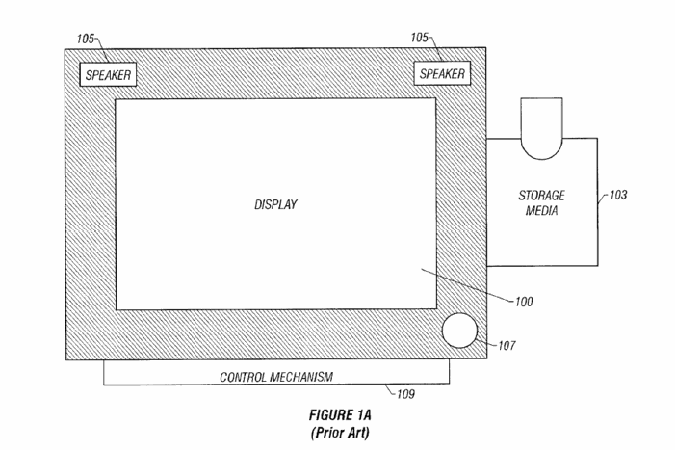
3J.A. 49.
Prior art digital picture frames were “isolated” devices, meaning that they did not have the ability to communicate with other devices “over a telecommunication medium.” J.A. 61, 2:28–32. This isolation resulted in three shortcomings, all relating to a requirement that a user be physically within reach of the digital picture frame. J.A. 61, 2:29–32. First, the data displayed on prior art devices was only obtainable from a storage media, such as a memory stick, requiring the user to “physically provide [the] storage media to the device.” J.A. 61, 2:15–17. Thus, “a person who [did] not have physical access to the device [could not] introduce new images into the device.” J.A. 61, 2:17 –19. But even physical presence is not enough absent having in hand the storage media. Second, only a user who could physically push buttons on the prior art devices could adjust the settings of the devices. J.A. 61, 2:17–22; J.A. 49, Figure 1A. Finally, prior art devices could not be updated remotely to add new features, such as “automatically receiv[ing] different types of image data.” J.A. 61, 2:33–35.
4The patents purport to overcome these shortcomings with an improved digital picture frame that is “self-configuring” and that “obtains images for display and/or software from a data repository [e.g., database] via an interconnection fabric (e.g. a computer network).” J.A. 64, 8:32–35; J.A. 64, 8:61–62. As a result, a user need not be within physical proximity of the frame to adjust its settings or to upload images. See J.A. 63, 6:39–41. “If a person . . . wants to display an image on the frame device the person may do so by transmitting the image data to the repository.” J.A. 63, 6:39–41. The user can access the data repository remotely “via a graphic user interface called a picture box,” which “is accessible via a web browser.” J.A. 63, 6:62–66. As a result, the owner of the digital picture frame need not upload images but can instead provide permission to a “parent” user, who can upload images to the device on the owner’s behalf. J.A. 68, 15:58–16:11.
The specification also notes that the invention “minimizes the amount of complexity presented to the user.” J.A. 64, 8:42–45. For example, the specification explains that the device is “self-configuring and self-maintained” and “does not require input from the user to obtain new images and/or update the onboard software.” J.A. 65, 9:32–35, 10:2–3. In one embodiment, the device “begins to acquire configuration information by obtaining the toll free phone number stored in the devices’ memory and using that number to connect to a server computer.” J.A. 65, 9:35–39.
Although the patents share a common specification, the four representative claims do not all share the same focus. Representative claim 19 of the ’573 patent, (i.e., the “digital picture frame” claim), recites a system of image data sharing via a “digital picture frame.” The remaining representative claims, (collectively, the “digital display device” claims), each recite a system of image data sharing via a variation of a “digital display device.”
5Claim 19 of the ’573 patent, the only claim which claims a “digital picture frame,” recites:
19. A system for distributing image data comprising: at least one digital picture frame comprising memory and operating system software located inside said digital picture frame configured to operate according to preferences defined by a user, said at least one digital picture frame comprising a border region modeled to resemble a picture frame designed to circumscribe printed photographs; a user interface coupled to at least one server system via a network wherein said user interface is physically separable from said at least one digital picture frame and configured to obtain image data and said preferences from said user and provide said image data and said preferences to said at least one server system; said at least one server system coupled to said at least one digital picture frame via said network, wherein said at least one server system is configured to periodically relay said image data and said preferences to said at least one digital picture frame when said at least one digital picture frame automatically issues a request for said image data and wherein said at least one digital picture frame is configured to obtain an update for said operating system software from said at least one server system.
J.A. 81, 4:16–39.
6Claim 1 of the ’930 patent is representative of the digital display device claims, and recites:2
1. A digital display apparatus having an integrated housing, said integrated housing comprising: an image display region on an outside surface of said integrated housing; a memory in an inside of said integrated housing, said memory comprising a plurality of image data files, security information comprising authentication information for a first remote server system and a unique identifier for said digital display apparatus, and a current version of onboard software; a processor configured to control the display of image data from said plurality of image data files in said image display region in accordance with said onboard software in said inside of said integrated housing; communication circuitry configured to engage a network medium in said inside of said integrated housing under the control of said processor; wherein said onboard software comprises: an image display function configured to obtain image data from said plurality of image data files in said memory for rendering in said image display region a remote connection function configured to automatically initiate communications with said first
7remote server system across said network medium, said remote connection function further configured to send a request for image data to said first remote server system after initiating said communications and to receive in response to said request for image data a set of data from said first remote server system comprising one or more image data files; an authentication function configured to authenticate said first remote server system prior to accepting said set of data from said first remote server system; a software update function configured to obtain an updated version of said onboard software from said server and to replace said current version of said onboard software in said memory with said updated version.
J.A. 142–143, 30:56–31:25.
II.
The asserted patents issued to Ceiva Logic, Inc. (“Ceiva Logic”), a non-party to this appeal and the parent company of appellant Ceiva Opco LLC (“Ceiva”). Ceiva, through Ceiva Logic, sued appellee Amazon.com Inc. (“Amazon”) in the U.S. District Court for the Central District of California for infringement of the ’573, ’930, and ’562 patents by a range of Amazon products, such as the Kindle, Echo Show, and Fire Tablet. The district court dismissed this suit for lack of subject matter jurisdiction when plaintiff Ceiva Logic admitted it did not own the patents and that Ceiva was the owner of the patents.
Ceiva refiled suit, adding the ’656 patent and accusing additional Amazon products, like the Fire TV. Amazon moved for summary judgment of invalidity of all asserted claims under 35 U.S.C. § 101.
8In deciding the summary judgment motion, the district court determined that claim 19 of the ’573 patent, claim 16 of the ’562 patent, and claim 1 of the ’930 and ’656 patents were representative. J.A. 9. At Alice step one, the district court held that all four representative claims were directed to the abstract idea of “‘automatically accessing a remote data repository to obtain updated content without the use of a computer and without any further user input,’ within the context of a digital picture frame.” J.A. 11. The district court reasoned that the representative claims were “aspirational” because they recite a “desired result” but “do not claim any specific way to achieve that result.” J.A. 13–14. At Alice step two, the district court determined that all representative claims did not recite an inventive concept. J.A. 17–20.
Ceiva appeals. We have jurisdiction under 28 U.S.C. § 1295(a)(1).
DISCUSSION
We apply regional circuit law when reviewing a district court’s grant of summary judgment. Constellation Designs, LLC v. LG Elecs. Inc., 174 F.4th 888, 900–01 (Fed. Cir. 2026). Applying Ninth Circuit law, we review a district court’s grant of summary judgment de novo. Kraus v. Presidio Tr. Facilities Div./Residential Mgmt. Branch, 572 F.3d 1039, 1043–44 (9th Cir. 2009). Summary judgment is appropriate when “there is no genuine dispute as to any material fact and the movant is entitled to judgment as a matter of law.” Fed. R. Civ. P. 56(a); see Anderson v. Liberty Lobby, Inc., 477 U.S. 242, 247–48 (1986).
Section 101 of the Patent Act states, “[w]hoever invents or discovers any new and useful process, machine, manufacture, or composition of matter, or any new and useful improvement thereof, may obtain a patent therefor, subject to the conditions and requirements of this title.” 35 U.S.C. § 101. The Supreme Court has determined that certain exceptions to the requirements of § 101 exist such that9 “[l]aws of nature, natural phenomena, and abstract ideas are not patentable.” Alice Corp. Pty. Ltd. v. CLS Bank Int’l, 573 U.S. 208, 216 (2014) (citation omitted). The patentability exception for abstract ideas, at issue in this case, embodies “the longstanding rule that [a]n idea of itself is not patentable.” Id. at 218 (citation modified).
To determine whether patent claims are directed to patent ineligible subject matter, the Supreme Court has developed a two-step test commonly known as the “Alice” test. Under Alice step one, we consider whether the claims at issue are directed to, in this case, an abstract idea. Id. at 217. If the claims are not directed to an abstract idea, the Alice inquiry ends. Id. If we conclude that the claims are directed to patent ineligible subject matter, the inquiry continues to Alice step two, where we ask whether the claims recite something “significantly more” than the abstract idea itself. Id. at 217–18. Specifically, the court must determine “whether the claim elements, individually and as an ordered combination, contain an inventive concept, which is more than merely implementing an abstract idea using well-understood, routine, and conventional activities previously known to the industry.” Chewy, Inc. v. Int’l Bus. Machs. Corp., 94 F.4th 1354, 1365 (Fed. Cir. 2024) (citation modified).
Because we see meaningful differences between the digital picture frame claim and the digital display device claims, we address them separately in turn.
I. Digital picture frame claim
We begin with claim 19 of the ’573 patent. We determine that this claim is not directed to an abstract idea and therefore end our inquiry there. We reverse the district court’s grant of summary judgment of ineligibility as to this claim and remand for further proceedings.
“In our eligibility analysis, we consider the claim as a whole . . . and read it in light of the specification.” Packet10 Intel. LLC v. NetScout Sys., Inc., 965 F.3d 1299, 1309 (Fed. Cir. 2020) (citation modified). “At step one, we look to what the specification describes as the invention only to help understand the focus of the claims.” ChargePoint, Inc. v. SemaConnect, Inc., 920 F.3d 759, 768 n.2 (Fed. Cir. 2019); see also Enfish, LLC v. Microsoft Corp., 822 F.3d 1327, 1337 (Fed. Cir. 2016) (noting that the specification’s teachings that the claimed invention achieves other benefits over conventional databases “bolstered” the conclusion that the claim was non-abstract). At step one, we are not concerned with “whether the claimed invention is actually novel.” ChargePoint, 920 F.3d at 768 n.2. “[A]ny novelty in implementation of the idea is a factor to be considered only in the second step of the Alice analysis.” Ultramercial, Inc. v. Hulu, LLC, 772 F.3d 709, 715 (Fed. Cir. 2014).
At Alice step one, “[w]e have held inventions to be patent-eligible where they recite a technological solution to a technological problem.” Ollnova Techs. Ltd. v. ecobee Techs. ULC, 177 F.4th 1343, 1360–62 (Fed. Cir. 2026) (internal quotations and citation omitted). In Ollnova, the claims recited a technological improvement in the operation of a wireless network because the claims recited a “particular technique governing when and how information is transmitted within a network using a wireless automation device,” such as through timing constraints. Id. at 1361. There, the specification confirmed that the claimed limitations addressed technical problems in wireless networks. Id. Similarly, in Contour IP Holding LLC v. GoPro, Inc., the claims recited a technologically improved point of view (“POV”) camera because the claims required parallel recording of low- and high-quality data streams, which, based on the specification, was an improvement to POV camera technology. 113 F.4th 1373, 1379–81 (Fed. Cir. 2024). Also, in Packet Intelligence, the claims recited an improved “packet monitor” for network monitoring when the claims detailed the steps in the monitoring process,11 which, based on the specification, was an improvement in network monitors. 965 F.3d at 1304, 1309–10.
Like the claims in Ollnova, Contour IP, and Packet Intelligence, claim 19 is directed to a technical solution to a technological problem, specifically an improved system for sharing digital images via a “digital picture frame” with a “physical separable” user interface. Claim 19 captures this technological improvement through its combination of claim limitations and requirement of a “digital picture frame” that is “physically separable” from the frame’s “user interface,” i.e., a “picture box” on a webpage, such that a user can upload “image data” and change the settings of the digital picture frame remotely via the user interface. In other words, because the claimed “digital picture frame” with a “physically separable” user interface governs when and how the digital picture frame (1) receives and displays image data to the user and (2) receives updates to its settings, the claim captures a sufficiently specific technological advancement (remote user access to a digital picture frame) in digital picture frame technology. Ollnova, at 1361. Put another way, the functional result of remote user access to the digital picture frame “is achieved by limiting the claim scope to” sufficiently concrete structures, including a “digital picture frame” with a “physically separable” user interface. See Am. Axle & Mfg., Inc. v. Neapco Holdings LLC, 967 F.3d 1285, 1302 (Fed. Cir. 2020) (explaining that the claim “must identify ‘how’ that functional result is achieved by limiting the claim scope to structures specified at some level of concreteness, in the case of a product claim, or to concrete action, in the case of a method claim”).
The specification confirms that the claimed invention addresses technological problems in digital picture frame technology. The specification explains that prior art digital picture frames had a proximity issue, i.e., that a user had to be physically present to upload pictures via a memory stick and had to physically manipulate the frame to update12 settings. J.A. 61, 2:15–22, 2:29–32; J.A. 49, Figure 1A; J.A. 63, 6:39–41.
The claimed digital picture frame overcomes the proximity issue by providing users with remote access to the device. J.A. 63, 6:39–41. For example, the owner of the digital picture frame could grant permission to a “parent” user, who could remotely upload images to the device on the owner’s behalf. J.A. 68, 15:58–16:11. In this way, claim 19 recites a specific type of improved digital picture frame that provides remote user access, and importantly does not simply recite, without more, the result of automatic, remote image sharing.
The district court’s decision below characterizes the claim at an impermissibly high level of generality. See Enfish, 822 F.3d at 1337 (“[D]escribing the claims at such a high level of abstraction and untethered from the language of the claims all but ensures that the exceptions to § 101 swallow the rule.”). Here, the district court disregarded the claimed advance over the prior art of an improved digital picture frame with a physically separable user interface. Specifically, the district court rejected Ceiva’s argument that claim 19 is directed to such a technological improvement, explaining that it:
discloses “[a] user interface . . . configured to obtain image data and said preferences from said user and provide said image data and said preferences to” a server. A generic user interface performing a generic function is not an improvement. Neither is communication between the user interface and server or other components. Moreover, the claim discloses only that the user interface is ‘configured’ to achieve a result. This type of results-based claiming does not constitute an improvement.
J.A. 13 (internal citations omitted and emphasis added). The district court’s quote of the claim language leaves out13 the critical claim limitation that the user interface “is physically separable from said at least one digital picture frame.” J.A. 81, 4:25–26. As a result, the district court’s erroneous characterization of the claim all but ensured the incorrect conclusion that the claim was not directed to a technological improvement but instead impermissibly claimed only a result.
In sum, we conclude that claim 19 of the ’573 patent is not directed to an abstract idea under Alice step one and is therefore patent eligible under § 101.3 We do not reach Alice step two.
II. Digital display device claims
We now turn to the remaining representative claims, claim 1 of the ’930 patent, claim 16 of the ’562 patent, and claim 1 of the ’656 patent. Unlike claim 19 of the ’537 patent, we agree with the district court that these representative claims are not patent-eligible under § 101. We affirm the district court’s grant of summary judgment as to these claims.
A.
Turning to Alice step one, the digital display device claims are notably unlike claim 19 of the ’537 patent in that they are “purely functional” claims that are directed to a result. Alice, 573 U.S. at 221–26. As “reflected repeatedly in our cases,” claims can be “abstract” under step one when they lack the “specificity required to transform a claim from one claiming only a result to one claiming a way of achieving it.” SAP Am., Inc. v. InvestPic, LLC, 898 F.3d 1161, 1167–68 (Fed. Cir. 2018). Importantly, the Alice step one requirement that claims are sufficiently specific as to14 “how” a functional result is achieved is part of the § 101 threshold test, which is distinct from, and not be confused with, the related, patentability requirement of enablement under 35 U.S.C. § 112. See Bilski v. Kappos, 561 U.S. 593, 602 (2010) (“The § 101 patent-eligibility inquiry is only a threshold test.”); Visual Memory LLC v. NVIDIA Corp., 867 F.3d 1253, 1261 (Fed. Cir. 2017) (“[W]hether a patent specification teaches an ordinarily skilled artisan how to implement the claimed invention presents an enablement issue under 35 U.S.C. § 112, not an eligibility issue under § 101. . . . [A] patent need not teach, and preferably omits, what is well known in the art.” (citation modified)).
Here, the representative claims are not limited to a “digital picture frame” that is “physically separable” from a “user interface,” such that the claims capture a concrete technological improved digital picture frame, as claim 19 of the ’573 patent does. Rather, these claims are broader, reciting variations of a “display device,” with most claims not even referring to a “user interface.”4 Additionally, some of the claims focus on “software” configured to achieve various functions, including remote access, but do not claim any specific way to achieve those results.
For example, claim 1 of the ’930 patent claims a “digital display apparatus” comprising an “image display region,” “memory,” a “processor,” and “onboard software,” with the software comprising various functions, such as “an image display function,” a “remote connection function,” an “authentication function,” and a “software update function,” “configured to” execute certain actions. J.A. 142–43, 30:56–31:25 (emphasis added). Notably, however, unlike claim 19 of the ’573 patent, in which the remote functionality is concretely captured by the claimed digital picture15 frame with a physically separable user interface, there is nothing in claim 1 of the ’930 patent directed to how to implement the software for the “remote connection function.”5 Thus, the representative claims of the ’930, ’656, and ’562 patents are written to claim “only a result” as opposed to a “way of achieving it.” See SAP Am., 898 F.3d at 1167–68. Accordingly, the representative claims are drawn to the underlying idea itself, i.e., “automatically accessing a remote data repository to obtain updated content without the use16 of a computer and without any further user input,” and are thus abstract at Alice step one. J.A. 14–15.
B.
Because the representative claims of the ’930, ’656, and ’562 patents are directed to an abstract idea, we proceed to step two of Alice. At step two, “a claimed invention’s use of the ineligible concept to which it is directed cannot supply the inventive concept that renders the invention ‘significantly more’ than that ineligible concept.” BSG Tech LLC v. BuySeasons, Inc., 899 F.3d 1281, 1290 (Fed. Cir. 2018). Here, neither the claims’ components nor its functions do anything more than implement the abstract idea of “automatically accessing a remote data repository to obtain updated content without the use of a computer and without any further user input.” We conclude that there is nothing in the claims sufficient to transform them into eligible subject matter.
Ceiva argues that the claims survive step two, or that a question of fact remains as to step two, by relying on secondary considerations to show an inventive concept, specifically industry praise for Ceiva’s commercial product, the “Ceiva Frame.” Appellant Br. 32 (citing J.A. 7443–82); see id. at 55. However, “[q]uestions of nonobviousness such as secondary considerations . . . are irrelevant when considering eligibility.” Ficep Corp. v. Peddinghaus Corp., No. 2022-1590, 2023 WL 5346043, at *7 (Fed. Cir. Aug. 21, 2023) (first citing SAP, 898 F.3d at 1163; and then citing Intell. Ventures I LLC v. Symantec Corp., 838 F.3d 1307, 1315 (Fed. Cir. 2016)). Even assuming such evidence can be relevant under a step two analysis, Ceiva does not explain how such evidence relates to any particular claim element or ordered combination of the elements. Appellant Br. 55–61. Instead, Ceiva broadly argues that praise of the Ceiva Frame being “pioneering,” “brilliant,” “surpris[ing],” “ridiculously easy” to install and use, and “unbelievable,” confirms that technological advantages, such as automatic17 configuration, automatic retrieval of pictures, and remote configuration, “are captured by the Asserted Claims.” Appellant Br. 55. This broad and conclusory statement does not sufficiently tie any evidence of secondary considerations, such as industry praise, to any claim limitation which could potentially indicate the inventiveness of that limitation.
In sum, we agree with the district court that the representative claims for the ’930, ’656, and ’562 patents do not recite an inventive concept under step two of Alice and are thus patent ineligible. We affirm the grant of summary judgment of patent ineligibility as to these claims.
CONCLUSION
We have considered the parties’ remaining arguments and find them unpersuasive. For the reasons provided, we reverse the district court’s grant of summary judgment of ineligibility as to the ’573 patent and remand for further proceedings as to this patent. We affirm the district court’s grant of summary judgment of ineligibility as to the representative claims of the ’930, ’656, and ’562 patents.
AFFIRMED-IN-PART, REVERSED-IN-PART, AND
REMANDED
COSTS
No costs.
Footnotes
- ↩ 1 We cite to the common specification as it appears in the ’573 patent unless otherwise specified.
- ↩ 2 While we have considered all claims at issue on appeal, because claim 1 of the ’930 patent is substantially similar to asserted claims in the ’656 and ’562 patents, our opinion identifies claim 1 of the ’930 patent as representative of the digital display device claims.
- ↩ 3 Patent-eligible does not mean patentable under, e.g., 35 U.S.C. §§ 102, 103, and 112. The patentability of the ’537 patent under those provisions is not before us.
- ↩ 4 Apart from representative claim 19 of the ’573 patent, only representative claim 1 of the ’656 patent recites an “interface.” See J.A. 112, 31:27–30.
- ↩ 5 To be clear, that a claim recites components “configured to” execute an action does not automatically render the claim abstract at step one of Alice. See Core Wireless Licensing S.A.R.L. v. LG Elecs., Inc., 880 F.3d 1356, 1359, 1362–63 (Fed. Cir. 2018) (holding claim non-abstract even though it recited “[a] computing device comprising a display screen, the computing device being configured to display on the screen a menu listing one or more applications, and additionally being configured to display on the screen an application summary . . . .” (emphasis added)); see also Contour IP, 113 F.4th at 1376, 1379–80 (holding claim non-abstract even though it recited “an image sensor configured to capture light . . . a wireless connection protocol device configured to send real time image content . . . a camera processor configured to . . . receive the video image data . . .” (emphasis added)). To hold that a claim is abstract simply because it contains certain phrases, such as “configured to,” would result in the slicing and dicing of claims, violating our well-established law that a claim for eligibility purposes should be viewed as a whole, and in light of the specification. See, e.g., Packet Intel., 965 F.3d at 1309. However, this is not the case here. As we conclude above, when read as a whole and in light of the specification, these claims do not sufficiently explain how to achieve the claimed desired results.